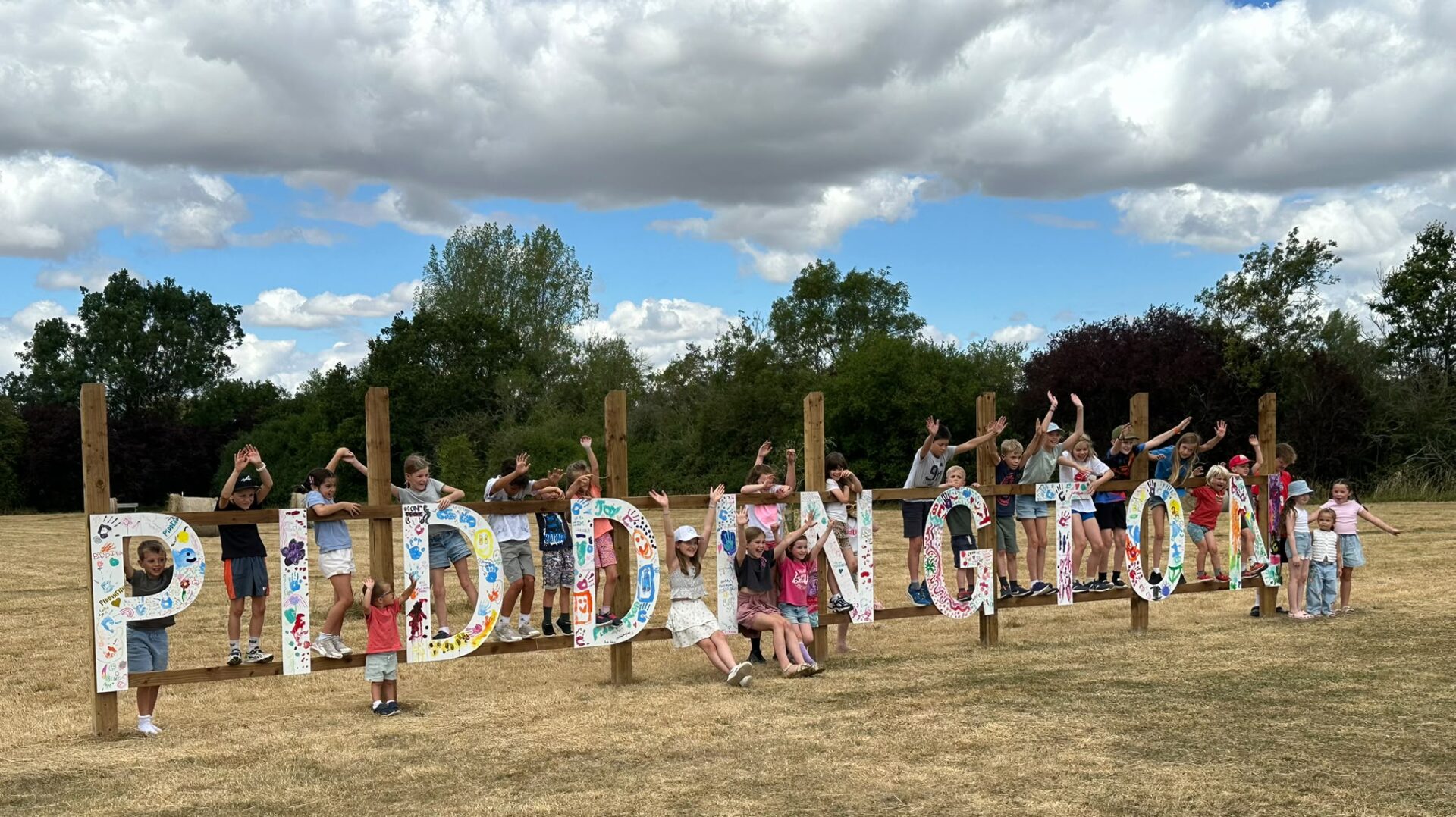
Many of you have been following Piddington’s story since it began on 26 June 2026. Our campaign itself only started on 3 July — and in a remarkably short space of time, our small village has shown just how powerful a determined, organised community can be when people come together and make their voices heard.
We’ve written letters, challenged decision-makers, spoken to the media, asked difficult questions and refused to be ignored. What began as one village fighting for a say in its own future has attracted attention and support from people across the country asking us the same question:
How can we do what Piddington has done?
So we’ve created The Blueprints.
This is our practical guide to taking a local concern and turning it into an organised, peaceful and democratic campaign — from bringing your community together and engaging your Parish Council, to putting local opinion formally on the record.
This is how we did it. This is how you can do it too.
Piddington is having its Independence Referendum on the 15th September 2026.
The anniversary of the Battle of Britain, the United Nations day of International Democracy and a week before the Labour conference party!
What could be more delicious? We are going for the Battle for Britain!
Your part:
Only the Prime Minister can call the general election or a vote of no confidence in the House of Commons. We as the little people have not voted him in and he has assumed position. Do we think he is a statesman? That is for you to decide. Parish Councils are your route in this plan.
Although any resolution or decisions they make are not legally binding their record of activity is for public view. We want you to approach and attend or insist to call an emergency Parish Council meeting in the area where you live. You have a legal right to be present during a Parish Council meeting but you must be respectful and polite. Request a meeting with the individual Parish Councillors and ask them to pass a motion that you want the village to consider a referendum on leaving the UK as has been done in Piddington already.
The number of people contacting us from across the country has made one thing increasingly clear: Piddington is not alone in believing that communities need a stronger democratic voice when decisions of major consequence are being made about their future. We therefore want to share a simple blueprint that communities can consider adapting to their own circumstances. This is not an instruction to support any particular political party or position. Nor does a local vote create a legal right for a parish to secede from the United Kingdom.
The purpose is much simpler: Give your community an opportunity to express its opinion peacefully and democratically — and put that opinion formally on the public record.
STAGE ONE — BUILD YOUR LOCAL CASE
Before asking anyone to vote, establish precisely what your community is concerned about. Keep the argument factual. Identify the decision or policy causing concern, what impact residents believe it will have, what questions remain unanswered and what outcome residents want their representatives to consider. Your campaign will be considerably stronger if people understand exactly what they are being asked to support.
STAGE TWO — TALK TO YOUR COMMUNITY
Start the conversation locally. This might include community meetings, conversations with neighbours, a website or social-media page, and a locally distributed information leaflet. Your material should explain both sides of the proposition and make clear that any proposed community vote is intended to demonstrate local opinion rather than itself create a legally binding constitutional change.
The objective is participation. Let the community decide.
STAGE THREE — ENGAGE YOUR PARISH COUNCIL
Contact your parish or town council clerk and councillors. Ask what procedure applies for requesting an item on a council agenda and for convening or raising an issue at a parish meeting. Do not assume that procedures are identical everywhere. Where councillors wish to bring an appropriate resolution before their council, work with the clerk to ensure that the wording and procedure comply with the council’s standing orders and applicable law.
STAGE FOUR — CONSIDER A PARISH MEETING AND PARISH POLL
In England, a parish meeting is distinct from a meeting of the parish council. A parish poll can arise from a question considered at a parish meeting, subject to the statutory requirements in force. Before proceeding, ask your parish clerk and the elections team at your principal local authority to confirm the applicable procedure. The first question should be clear, neutral and capable of a straightforward answer. One possible formulation for discussion with your clerk or returning officer is: “Should this parish consider holding a further community vote on whether it should seek greater political self-determination, including the possibility of independence from the United Kingdom?” YES / NO
The precise wording should be checked with the relevant authorities before being adopted.
STAGE FIVE — THE FIRST VOTE
The purpose of the first vote is to establish whether there is meaningful local support for taking the discussion further. It is not a declaration of independence. It does not change the constitutional status of the parish. It answers one question: Does our community want this question explored further?
Whatever the result, publish it accurately. Record: number entitled to vote; votes cast; turnout; votes for each answer; and rejected or otherwise uncounted ballots, where applicable.
Transparency is essential.
STAGE SIX — IF THE COMMUNITY VOTES YES
A positive first result provides a mandate to continue the local discussion. The community can then determine whether it wishes to hold a second, explicitly symbolic community ballot at a future date. For example: “Should [PARISH/VILLAGE] express its democratic wish to seek independence from the United Kingdom?” YES / NO
Again, such a result would not itself legally remove a parish from the United Kingdom. Its significance would be political and democratic: it records what participating local electors said when they were actually asked.
STAGE SEVEN — PUT THE RESULT ON THE RECORD
Send the result to: Your Member of Parliament. Your local authority. Relevant Government departments. And, where appropriate, the Prime Minister. Publish the complete result locally so supporters and opponents alike can see exactly what happened. Piddington would also welcome communities sharing verified results with us so that we can understand where similar debates are taking place around the country.
STAGE EIGHT — REMAIN PEACEFUL, LAWFUL AND DEMOCRATIC
This principle is fundamental.
No intimidation.
No harassment.
No threats.
No hostility towards individuals or communities.
Challenge decisions.
Challenge policies.
Challenge institutions.
Challenge politicians.
But do it through argument, evidence and democratic participation.
TWO DATES. TWO QUESTIONS.
The model is deliberately simple.
DATE ONE — THE MANDATE
Does the community want the question of greater self-determination or independence to be explored further? If the answer is No, respect it. If the answer is Yes, move to the next stage.
DATE TWO — THE DECLARATION
At a later date, after proper public discussion: Does the community wish symbolically to express support for seeking independence from the United Kingdom? Again, respect the result.
WHY THIS MATTERS
A single village expressing dissatisfaction can easily be dismissed. Multiple communities independently holding properly organised democratic discussions and recording their results create something different: evidence. Not opinion polls. Not social-media likes. Not assumptions about what people think. Actual recorded expressions of local opinion.
Some communities may vote Yes.
Others may vote No.
Both results matter.
Because the principle we are defending is not that every community must agree with Piddington.
The principle is that communities should be heard. Piddington began asking these questions because of what was happening to our own village. Where this goes next should be determined not by us, but by every community that chooses peacefully and democratically to ask its people what they think.
Keep us informed. Share your experience. Share your results.
And above everything else: